Comparison: Press Payback Periods by Job Volume
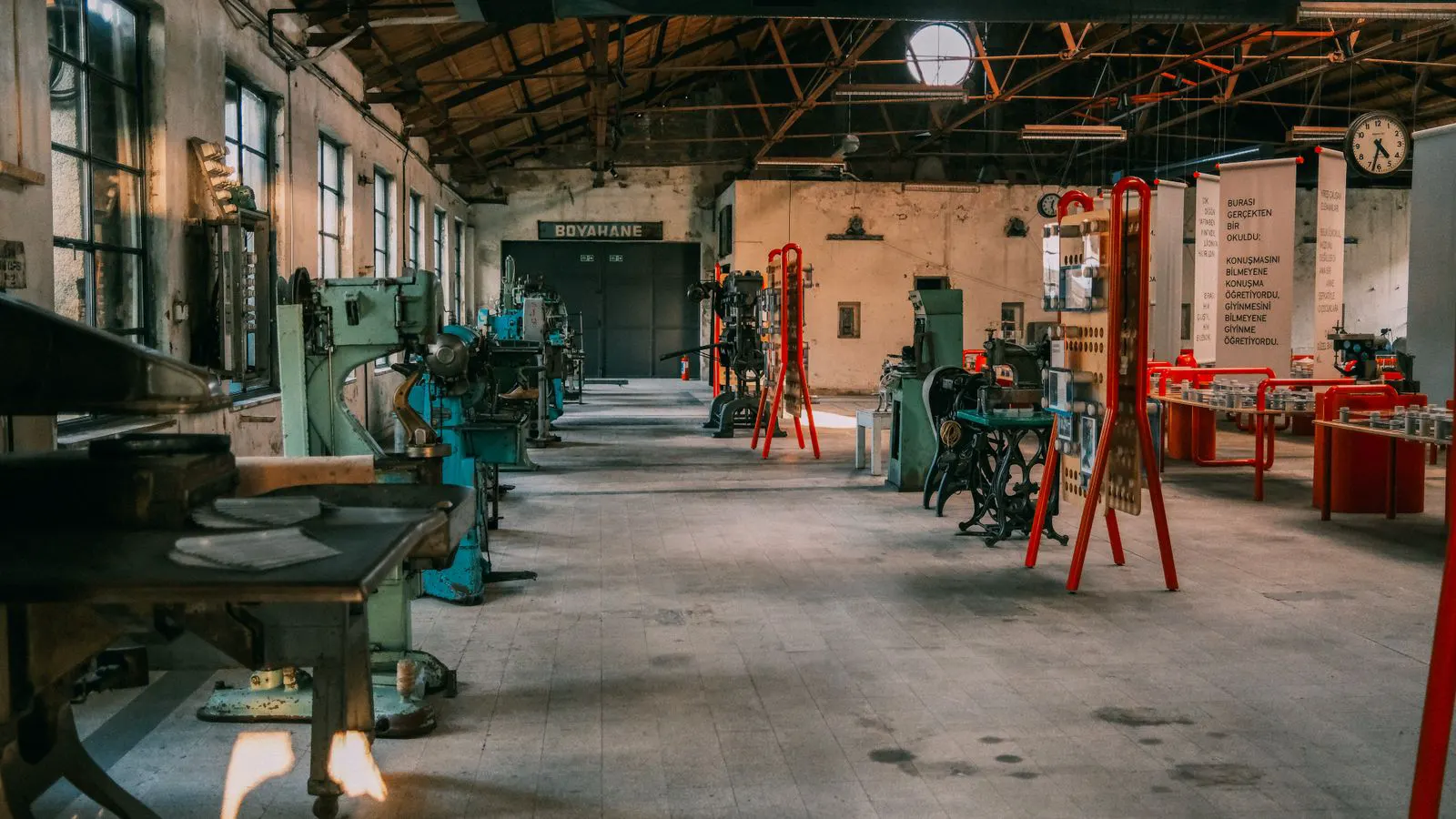
Press payback period depends on job volume, press type, and cost per impression. Short runs favor digital, while long runs favor offset. This guide compares recovery timelines and ROI by volume to guide your investment decision.
- Press payback period varies widely based on job volume and machine type.
- Short runs typically favor digital presses for faster recovery.
- Long runs often favor offset presses due to lower cost per impression.
- Total cost of ownership includes maintenance, energy, and materials.
- Job mix and downtime affect actual ROI significantly.
How Press Payback Period Works
Press payback period measures the time required for a machine to recover its purchase cost through the profit generated by printed jobs. The calculation divides the net cost of the press by the expected net profit per impression, then multiplies by the average impressions per day. This metric strips away marketing claims and focuses on the actual cash flow needed to justify the capital outlay. It tells you how many days of production are required before the machine begins contributing to net profit rather than consuming it.
A 2000-ton offset press may cost significantly more than a digital press, but it produces a lower cost per impression at high volumes. The break-even point shifts based on your production schedule. If you run eight-hour shifts, five days a week, the daily impression count changes the math. If you run overnight shifts, the payback period shortens because the machine generates revenue during hours when labor costs are often lower or when the press operator can cover multiple tasks. A press running at full capacity for twenty-four hours recovers costs at twice the rate of a press running only eight hours a day, assuming the job mix remains consistent.
The formula uses net profit, not gross revenue. You must subtract paper, ink, plate, energy, labor, and maintenance costs from the selling price. A machine with a high throughput may still have a long payback period if your job mix includes many small, low-margin runs. For example, a high-speed offset press might print 100,000 sheets an hour, but if half of those sheets go to jobs with 5 percent margins, the cash flow is slower than expected. You need to model the net profit per impression based on your actual job structure, not the theoretical maximum.
Comparison of Press Types by Volume
| Option | Best for | Limitations |
|---|---|---|
| Digital Press | Short runs, high mix, on-demand | Higher cost per impression at volume |
| Offset Press | Medium to long runs, steady volume | High plate and setup costs |
| Gravure Press | Very long runs, high consistency | Highest initial cost, low flexibility |
| Screen Press | Large format, specialty substrates | Slower speed, higher setup time |
| Sheetfed Offset | Mixed short and medium runs | Slower than web, higher labor cost |
Digital presses recover investment through volume flexibility. They handle short runs efficiently. The cost per impression remains relatively flat across job sizes. This makes them suitable for print shops that serve multiple customers with varying requirements. A digital unit might handle a 500-copy brochure one morning and a 5,000-copy catalog the next without significant downtime. The labor cost per impression rises as the run size drops, but the machine never sits idle waiting for a long run to start. This constant production flow smooths out the payback period, preventing the large gaps in revenue that affect heavier machinery.
Offset presses require plate setup. Each color needs a plate. This adds time and cost per job. However, the cost per impression drops sharply after the first 5000 to 10000 impressions. For a 100000 impression run, offset becomes highly efficient. The ink and paper costs per sheet drop below digital levels. The setup cost, which includes plate creation, plate mounting, and color registration, is a fixed burden that becomes negligible when spread over a large number of units. If a shop prints mostly long runs, the offset press pays back its premium price quickly because the per-unit cost advantage compounds with every additional sheet printed.
Gravure presses use rotating cylinders. They offer consistent quality over millions of impressions. The initial cost is high. The payback period depends entirely on running the machine continuously. If the press sits idle for weeks, the recovery timeline extends. Gravure is often used for newspaper printing or high-volume packaging where the product must look identical on the first sheet and the last sheet. The plates are etched or laser-engraved, meaning the setup is permanent for the run. Changing the design requires new plates and a long changeover. This rigidity means the payback calculation must assume a long-term commitment to that specific product or client.
ROI by Volume Scenarios
ROI by volume depends on three variables. The first is the number of impressions per day. The second is the profit margin per impression. The third is the downtime rate. These three factors interact in complex ways. A high impression count does not guarantee a fast payback if the margin is thin. A high margin does not help if the press stops for maintenance every few hours. You must look at the product of these variables to understand the true recovery speed.
Consider a 5000 impression job. A digital press may charge 0.25 per impression. An offset press may charge 0.15 per impression, but with a plate cost of 500 per job. The digital press has no plate cost. The break-even point for the offset press is around 3000 impressions. Below that, digital wins. Above that, offset wins. In this scenario, the offset press is losing money on the first 3000 sheets when you account for the plate expense. The digital press makes a small profit on every sheet from the start. For a shop that prints mostly short runs, the offset press may never reach the break-even point on many jobs, extending the overall payback period.
For a 50000 impression job, the offset press advantage widens. The plate cost is spread over more impressions. The cost per impression for offset drops further. The payback period for the offset press shortens significantly. The fixed cost of 500 becomes 1 percent of the job value. The variable cost of ink and paper also drops as the machine stabilizes. The offset press operates at peak efficiency during this range. A shop that prints mostly medium-length runs will find the offset press pays back its cost faster than a digital press because the per-unit savings accumulate over a larger number of units.
For a 500000 impression job, offset and gravure dominate. The initial setup cost becomes negligible relative to the total run length. The press must run efficiently to maintain the low cost per impression. At this scale, the choice of press is driven by quality consistency and speed rather than setup cost. The payback period becomes a matter of months rather than years. The machine is running hard, generating cash flow every hour. The risk is not the payback period itself, but the ability to secure the volume to keep the press running.
Factors That Extend Payback Period
Several factors extend the press payback period. The first is underutilization. If the press runs only four hours a day instead of eight, the daily impression count halves. The payback period doubles. This is the most common mistake in payback calculations. Many shops buy a press for the maximum capacity but only use it for half the available time. You must model the actual hours the press will run, not the theoretical maximum. If you only have enough jobs to fill four hours a day, do not calculate the payback based on eight hours.
The second is job mix. A shop that prints 80 percent short runs and 20 percent long runs will see a longer payback period on an offset press than a shop that runs 80 percent long runs. The offset press idles during short run setup. Every hour spent changing plates, cleaning the fountain, and adjusting registration is an hour of lost production. The labor cost of that setup is often not fully recovered in the price of the short run. The press sits idle or runs at a low speed, reducing the net profit per day.
The third is maintenance downtime. Unplanned stops reduce production. A press with 95 percent uptime recovers faster than one with 85 percent uptime. Maintenance schedules must be planned. Preventive maintenance prevents major failures. If a press breaks down for two days a month, you lose two days of revenue. That is 25 percent of your production time. You must add the cost of maintenance to the net cost of the press. The payback period extends every time the press is down for repair.
The fourth is energy costs. Presses consume significant power. Energy prices affect the cost per impression. A press in a high-energy-cost region has a different payback profile than one in a low-energy-cost region. The cost of electricity to run the cylinders, the fans, and the lighting adds up over thousands of hours. If energy prices rise, the net profit per impression drops. The payback period lengthens. You should factor in the current energy cost and a reasonable range for future fluctuations when calculating the recovery timeline.
How to Calculate Investment Recovery
To calculate investment recovery, start with the net cost of the press. This includes the purchase price, shipping, installation, and initial training. It does not include the cost of the building or utilities. It also does not include the cost of the floor space or the ventilation system, unless those are new installations specifically for the press. The net cost is the total amount of capital you must put in to get the machine ready for production.
Next, determine the average net profit per impression. Take the average selling price per impression and subtract the variable costs. Variable costs include paper, ink, plates, energy, and direct labor. Fixed costs like rent and management salaries are separate. You must calculate the net profit based on your actual average job, not the best-case scenario. If your average job is 1000 impressions with a 0.10 margin per impression, the net profit is 0.10 per impression. If your average job is 10,000 impressions with a 0.05 margin, the net profit is 0.05 per impression. The job size and margin structure determine the recovery speed.
Multiply the net profit per impression by the average impressions per day. This gives you the daily net profit. Divide the net cost of the press by the daily net profit to get the payback period in days. Convert days to months or years as needed. This calculation gives you a baseline. It assumes steady production and no major changes in cost or demand.
Example: A press costs 500000. The net profit per impression is 0.05. The average daily impressions are 10000. The daily net profit is 500. The payback period is 500000 divided by 500, which equals 1000 days. That is roughly 2.7 years. This number is the theoretical minimum. It assumes the press runs every day at that exact pace with no downtime. In reality, you should add a buffer for maintenance and seasonal fluctuations.
If you improve the job mix or reduce downtime, the payback period shortens. If you increase the selling price per impression, the payback period shortens. If you reduce ink waste, the payback period shortens. Each improvement in net profit per impression reduces the number of days needed to recover the initial cost. You can use this formula to test different scenarios. For example, if you can reduce the net cost per impression by 0.01, the payback period drops from 1000 days to 10000 days. This shows how sensitive the calculation is to small changes in cost structure.
When to Pick Each Press Type
Pick a digital press when your job volume is low to medium and your mix is diverse. You need short turnaround times. You print for multiple customers with different requirements. The digital press handles this without high setup costs. It is the right choice if your revenue depends on speed and flexibility rather than the lowest possible cost per unit. A digital press allows you to take on small jobs that would not be profitable on an offset press. This diversity of jobs keeps the machine busy and generates cash flow that supports the payback period.
Pick an offset press when your job volume is medium to high and your runs are steady. You need consistent quality. You print for a few large customers. The offset press offers a lower cost per impression at volume. It is the right choice if your business model relies on long runs with tight tolerances. The offset press requires a higher level of skill to operate and maintain. The payback period is driven by the ability to secure long-term contracts that keep the press running at high efficiency.
Pick a gravure press when your job volume is very high and consistent. You need uniform quality over millions of impressions. You print packaging or magazines. The gravure press recovers its cost over time through continuous operation. It is the right choice if you have a dedicated product line that runs for years without change. The gravure press is a heavy investment. The payback period is long, but the per-unit cost is the lowest of any printing method. It is not suitable for a shop with a mixed job structure.
Pick a screen press when you print large format or specialty substrates. You need to handle non-standard materials. The screen press handles these jobs that offset and digital cannot. It is the right choice if your market is in signage, vehicle wrapping, or industrial applications. The screen press has a high setup cost and a slower speed. The payback period depends on the ability to command higher prices for the specialty jobs it handles.
Pick a sheetfed offset press when your job volume is mixed. You need flexibility for short and medium runs. You have space constraints. The sheetfed offset press balances quality and speed. It is the right choice if you cannot afford a web press but need better quality than digital. The sheetfed offset press has a higher labor cost per impression than a web press. The payback period is longer than a web press but shorter than a digital press for the same job volume.
Final Considerations
The press payback period is not a single number. It is a range based on your production profile. A machine that looks expensive on paper may recover quickly if it runs full shifts. A machine that looks affordable may take years to recover if it runs part time. You must model the actual production scenario, not the theoretical maximum. The payback period is a tool for comparison, not a guarantee. It helps you decide which machine fits your current business model, but it does not predict future changes in demand or technology.
Consider the total cost of ownership. This includes maintenance, energy, and materials. A press with a high purchase price may have low operating costs. A press with a low purchase price may have high operating costs. You must look at the total cost over five or ten years, not just the purchase price. The press that has the lowest payback period today may have the highest operating costs tomorrow. You must balance the initial cost with the long-term running costs.
Review your job mix. If 70 percent of your revenue comes from short runs, a digital press may be the better choice. If 70 percent comes from long runs, an offset press may be better. The job mix determines which press generates the most net profit per day. You must match the press to the job mix. A mismatch between the press and the job mix extends the payback period because the machine is not operating at its most efficient point.
Check your downtime history. If your current machines have high downtime, a new machine with better reliability may reduce your payback period. If your current machines run well, the advantage of a new machine may be smaller. You must factor in the reliability of the new machine. A press with a high uptime rate generates more net profit per day. The payback period is shorter for a reliable press than for one that breaks down frequently.
Use the payback period as a comparison tool. Do not use it as the only decision factor. Consider quality, speed, and future demand. The press that recovers fastest today may not be the best fit for your business in five years. You must look beyond the payback period to the long-term strategic fit. The press that has the longest payback period today may be the best choice if it aligns with your future growth plans.
Frequently asked questions
How long does a digital press take to pay back?
Digital presses typically have a shorter payback period for low volume jobs. The exact time depends on your job mix and profit margin.
What is the best press for high volume jobs?
Offset and gravure presses are best for high volume jobs. They offer a lower cost per impression at scale.
How do I calculate my press payback period?
Divide the net cost of the press by your expected daily net profit. The result is the payback period in days.
Does job mix affect the press payback period?
Yes. A diverse job mix with many short runs extends the payback period for offset presses. A steady long run mix shortens it.
What is the difference between payback period and ROI?
Payback period is the time to recover the initial cost. ROI is the total return relative to the investment over the machine's life.