Checklist: Verifying Local Spare Parts Availability
Procurement managers need to confirm local stock and lead times before signing a purchase order. This checklist breaks down questions for vendors on critical components, vendor parts logistics, and installation planning. Use it to audit supplier capability and reduce downtime risk.
- Ask for a written list of locally stocked components and their standard lead times.
- Verify the vendor's local service network and response protocol for critical failures.
- Check if the purchase includes an initial stock of high-wear parts for the first year.
- Confirm who manages vendor parts logistics and who handles emergency dispatch.
- Review installation planning to ensure the machine is ready for local service access.
Before signing a purchase order for new printing equipment, procurement teams must verify the supply chain behind the machine. A fast press that stops waiting for a bearing or a seal is just a very expensive paperweight. You need to know what is in the local depot and what takes weeks to arrive from the factory.
This checklist is built for buyers who are moving from evaluation to execution. It separates general support promises from hard facts. Run each item with your vendor. If a question cannot be answered with a specific part number and a date, treat it as a gap in the vendor parts logistics plan.
What components are actually in local stock?
Do not accept a general statement that all parts are available. Ask the vendor to list the top twenty components that are held in the local warehouse. This list should cover items that wear out during normal operation, not just major assembly units.
Ask for the part numbers. A list that reads “bearing set” or “ink duct” is not useful. You need the specific part number so your maintenance staff can order it in a hurry.
Also ask about the quantity. If a local depot holds one set of drive belts, that is not enough for a two-shift plant. If the machine runs two shifts, ask if the local stock is sufficient for a single failure event without stopping production for days.
What are the standard lead times for critical components?
Stocked items are easy to verify. The harder question is what happens when the local depot is empty. You need to know the standard lead time for the most critical non-stocked parts.
Build a table with your vendor. List the part, the local stock status, the factory location, and the standard transit time. This is where you test the vendor parts logistics. Ask if the transit time includes customs clearance and local delivery.
Ask for the worst-case scenario. Some vendors will give you a standard time of five days. Ask what happens during a holiday period or if the factory is in a region with common weather disruptions. You are looking for a range, not a single date.
| Component Type | Local Stock Status | Standard Lead Time | Worst Case Lead Time |
|---|---|---|---|
| Drive Belts | Yes | 1 day | 3 days |
| Ink Duct | No | 7 days | 21 days |
| Registration Gear | No | 14 days | 30 days |
| Seals and Gaskets | Yes | 1 day | 2 days |
| Control Board | No | 10 days | 25 days |
How does the vendor handle emergency dispatch?
A standard lead time is one thing. An emergency dispatch is another. You need to know the protocol when a machine stops during a production run.
Ask who to call. Is it a central call center, a local service technician, or a dedicated account manager? Ask if there is a 24/7 emergency line. If the answer is no, that is a red flag for any operation that runs outside business hours.
Ask about the response time. “We will try to send someone” is not a plan. You need a target. If a local technician is available, ask if they can be on site within four hours. If parts are missing, ask how they handle the gap. Do they ship a temporary fix, or does the machine sit idle?
Check the vendor’s track record. If you are buying from a brand with a long local history, ask for examples of recent emergency service calls. If they are a new entrant, ask how they plan to build the local technician pool.
Does the purchase include an initial parts kit?
Many buyers forget to ask about the first year of operation. New machines often fail in the first six months as they break in. You want to avoid paying for urgent shipping during this period.
Ask if the purchase price includes an initial kit of high-wear parts. This should include belts, seals, and small mechanical components. Ask if the kit is sized for a specific production volume. A kit for 50,000 sheets per year is not the same as a kit for 500,000 sheets.
If the vendor does not offer a kit, negotiate the cost. You can often buy the parts separately for a discount if you order them with the machine. This prevents the parts from being held in a foreign warehouse while you pay full price for expedited shipping later.
How does installation planning affect service access?
Installation planning is often overlooked in the spare parts discussion, but it directly impacts how fast a technician can access a failing part. If the vendor installs the machine in a location with tight floor space, a technician may not be able to reach the drive mechanism without moving other equipment.
Ask the vendor to review your floor plan before the machine arrives. They should mark where the service points are. If the registration system is high up, ask if a platform is needed. If the ink duct is on the side, ask if there is enough clearance for a wrench.
Also ask about the electrical connections. If the control board is in a cabinet with no ventilation, it may overheat and fail. Make sure the installation plan includes adequate airflow. This is a simple check that prevents a major failure later.
Who manages the vendor parts logistics?
You need to know who is responsible for moving the parts. Is it the vendor, a third-party logistics provider, or the local distributor? If it is a third party, you need to know the point of contact.
Ask for the logistics manager’s name and direct line. When a part is stuck in customs, you do not want to go through a general email inbox. You want a person who can call the carrier and push the shipment.
Ask about the tracking. Can you see the status of a part in a portal? Can you get a notification when it arrives at the local depot? This level of transparency is what separates a professional logistics setup from a chaotic one.
Check the return policy. If a part is defective, who pays for the return shipping? If the vendor does not have a clear process, you will end up paying for both the return and the replacement.
How do you verify local stock claims?
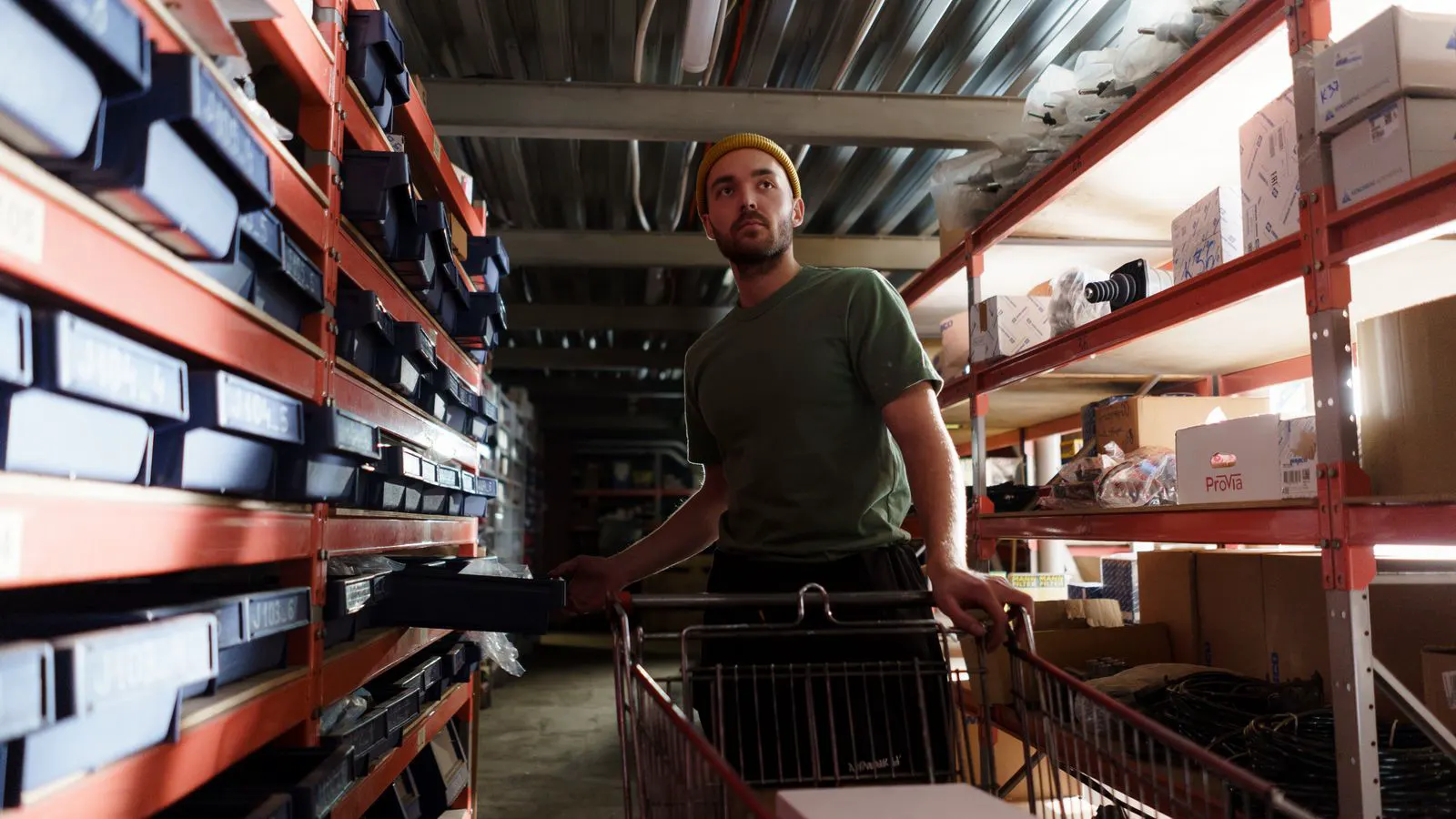
You have asked the questions. Now you need to verify the answers. Do not take a verbal promise as a fact. Ask the vendor to send a photo of the local warehouse shelf with the specific part numbers visible.
If the vendor cannot provide a photo, ask for a current stock report. This should be a document that lists the part, the quantity, and the last date it was updated. If the report is more than a month old, it is not reliable.
You can also ask for a site visit. If the machine is a major investment, a short visit to the local depot is worth the travel cost. Seeing the shelves with your own eyes is better than reading a spreadsheet.
Red flags to watch for:
- The vendor refuses to provide part numbers.
- The local stock list is vague or generic.
- The lead times are consistently the same as the factory location.
- There is no dedicated contact for logistics.
- The vendor cannot provide a current stock report.
- The installation plan ignores service access.
If you see two or three of these red flags, slow down. Do not sign the purchase order until the gaps are filled. A delay in purchase is cheaper than a delay in production.
Use this checklist as a living document. Update it as you learn more about the vendor. Share it with your maintenance team so they know what to expect when the machine is installed. This process turns a vague promise into a workable plan. It gives you the data you need to make a confident decision.
Frequently asked questions
Can I rely on the vendor's general support statement?
No. General statements do not confirm stock or lead times. You need a written list of local parts and specific transit times to verify the vendor parts logistics.
What if the vendor has no local depot?
Ask about a regional depot or a partner distributor. If there is no local or regional stock, negotiate a larger initial parts kit to cover the first year of operation.
How often should I check the local stock levels?
Check quarterly. Inventory changes. A part that is in stock in January may be gone in April. A quick email to the logistics manager is enough to update your file.
Do I need to verify the installation plan for parts access?
Yes. If a technician cannot reach a part, the lead time is irrelevant. Review the floor plan with the vendor to ensure service access is possible.
What is the best way to handle a missing part?
Have a pre-agreed protocol. If the local depot is empty, the vendor should ship a temporary fix or a direct replacement from the factory. Make sure this is in the contract.